






 Full List of Fruits Atemoya fruit
ATEMOYA FRUIT
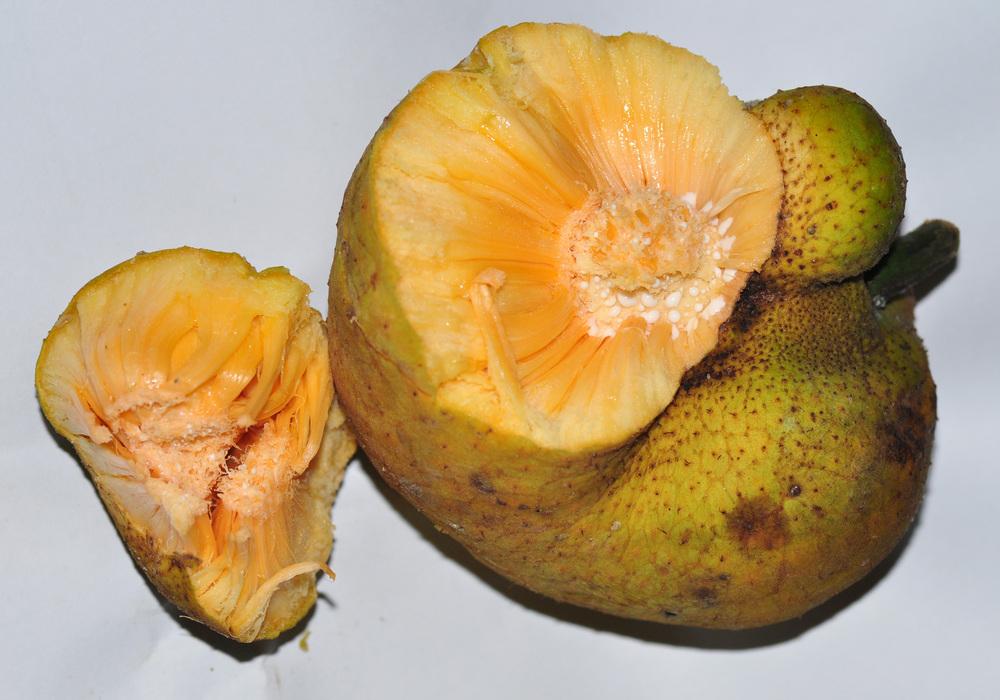
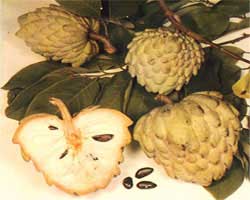
The atemoya, is a hybrid of two fruits – the sugar apple (Annona squamosa) and the cherimoya (Annona cherimola) – which are both native to the American tropics. The atemoya fruit is an extremely flexible and robust fruit in the tropical region. An atemoya is normally heart-shaped or rounded, with pale-green, easily bruised, bumpy skin. Near the stem the skin is bumpy as it is in the sugar apple but become smoother like the Cherimoya on the bottom. The flesh is not segmented like that of the Sugar Apple, bearing more similarity to that of the Cherimoya.
Common name |
annon, custard apple |
|---|---|
Scientific name |
Annona squamosa x A. cherimola and A. cherimola x A. squamosa hybrids |
Family |
Annonaceae |
Origin |
Derived from man-made and natural hybrids. |
Relatives |
Sugar apple, cherimoya , soursop , custard apple, pond apple , ilama |
Distribution |
Grown in subtropics and tropics. Home landscape trees also found in southeastern shore of Lake Okeechobee and lower east and west coasts. |
Click on the below Atemoya Fruit you wish to find about
The various Kiwi Fruits are distinguished as botanical species rather than as cultivars. The following are those most utilized for food:

 Geffner is an Israeli cultivar.Geffner', produces well without hand pollination.It is not superior to the African Pride. 'Geffner' is a productive, well known variety.

The heart shaped fruit have a medium thick skin, extra seed and produces high yields.
The early, steady bearing, presentable fruit and early maturing is what makes this as the main commercial variety.
The flesh is sweet and soft and usually eaten when it’s fully ripe.
It is rich with protein, carbohydrate, vitamin A, calcium, and phosphorus

 Bradley is less solid than Geffner varieties, but the flavor and surface are of excellent quality.Bradley is susceptible to the root and stem that decompose diseases. The fruit variety is in Oblate or Ovoid in shape and it is in medium size. It looks like in greenish in color with sweet taste.
 Malamud is another variety of atemoya which is of Israeli origin.The fruit is generally pink in color

- Potential for weight control
- More energy for exercising
- Reduced risk of cardiovascular diseases
- Reduced risk of developing cancers
- Lower blood pressure.
- Potential to lower cholesterol
- Reduced change of developing type 2 diabetes
- Potential to slow down age process.