






 Full List of Fruits Rambutan Fruit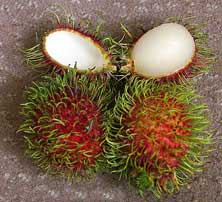
RAMBUTAN FRUIT
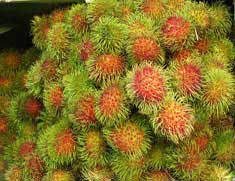
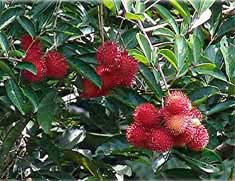
Appearance- Rambutan fruit is naturally red in color but they sometimes seem like yellow or orange. 'Rambut' is a malay word which means “hair”, hence it got its name because of the Thorn like appearance. The shape of Rambutan fruit is round or oval and it is upto three to six to four cm in dimension. Rambutan is borne in clusters. Its leather like skin has flexible thorns. It has brownish seed with two to three cm in size and is basally scarred. It is soft and crusty.
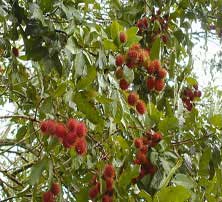
Even though the raw seeds are poisonous, they may be eaten after cooking. Complete ripe fruits are mostly ugly brown in colour. The Rambutan tree grows upto 10 to 20 m in height. Its alternate leaves are 10 to 30 cm in length and have three to eleven leaflets, each and with an entire margin have a special structure. Small Flowers with leaf petal which are about 2 1/2 to 5 mm in size are in disk-shape and they have bloomed cluster wise.
Taste-A good rambutan has a firm and juicy flesh. It has a sweat taste, and it is somewhat similar taste of lychee fruit. The tree will actually look like a enlarged Chirstmas tree. A rambutan is best within mid-season somewhere around June-August as they seem to be most sweet, and large.. It is more sweet than sour. When it gets ripened the flesh separates easily from the seed. But when it is not quite ripe, the flesh sticks to the rambutan seed and the taste is a little sour overall, still not a bad taste though.
The tree is called by many names, the primary name is Rambutan., but there are several other different dialect names to the small native communities that surround Southeast Asia.
- Ramboutan or ramboutanier in French
- Ramboetan in Dutch
- Ramboostan in India
- Shao tzu in Chinese
- Chom chom or vai thieu in Vietnam
- Ser mon, or chle sao mao to Kampucheans
Lebakbooloos
Seematjan
Seenjonja
Maharlika
Sectangkooweh
Seelengkeng

Seekonto
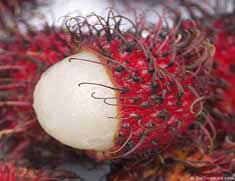


It is a good source of vitamin C and calcium, rambutan fruit provides fairly a good amount of niacin, iron, protein and fiber. A recent study found out that eating nine to ten fruits and vegetables of rambutan family per day, were effective in lowering blood pressure.
Rambutan fruit contains carbohydrate, protein, fat, phosphorus, iron, calcium and vitamin C. Coat tannin of fruit and Leaves contain saponin. The seeds always contain fat and polifenol. Skin and stem contains tannin, saponin, flavonida, pectic substances, and iron.. Rambutans roots, bark, and leaves have various uses in the production of dyes and drugs. Part of this plant can be used as a medicinal fruit and have benefits for health such as
| Nutritive value per 100 g of Rambutan | ||
| Principle | Nutritive value | |
| Protein | 1.0 g | |
| Cholesterol | 0.0 mg | |
| Thiamin | 0.01mg | |
| Vitamin C | 7.4 mg | |
| Sodium | 16.5 mg | |
| Potassium | 63.0 mg | |
| Calcium | 33.0 mg | |
| Vitamin A | 4.5 IU | |
| Iron | 0.5 mg | |
 Rambutan Recipe
- 2 cloves garlic, firmed.
- 2 teaspoons (approx) firmed coriander roots.
- 2 tablespoons fresh coriander leaves (or sage) vegetable oil.
- 4 tablespoons ground roasted peanuts.
- 4 teaspoons soy sauce.
- 4 tablespoons palm sugar.
- 1 chopped de-seeded chili pepper
- 2 cans rambutans, exhausted.
Drop the edible oil to fry the crushed garlic and coriander roots. When garlic becomes golden brown, add all the other ingredients except rambutans into this mixture. Cook well and stir until the mixture turns brown and fairly dry. Add rambutans into the ingredients. Cook and mix well for about 2 minutes. Serve as an entree or as a main course with rice.