






 Introduction of ApplesHistory of ApplesNutrition FactsVarieties of ApplesHealth Benefits of ApplesCosmetic Benefits of ApplesSelection and storagePreparation and serving tipsHarvestingVarieties of AppleApple Fruits Gallery

Apple-The King
- Apples are one of the most widely grown and consumed pome fruits in the world, valued for their crisp texture, natural sweetness, and impressive nutritional profile. They belong to the family Rosaceae and are cultivated in diverse climates across continents. With more than 7,500 known cultivated varieties worldwide, cultivars range in flavor from tart to sweet and in color from vibrant red to golden yellow and fresh green.
- Major producing regions such as China, United States, and parts of Europe continue to lead global production, driven by technological advancements in orchard management, sustainable farming practices, and post-harvest storage innovations like controlled atmosphere storage, which help maintain freshness for longer periods.
- Rich in dietary fiber, especially pectin, and a good source of antioxidants including vitamin C and flavonoids, apples support heart health, digestion, and immune function. Their versatility makes them a staple in products ranging from fresh snacks to apple juice, apple cider, and baked favorites like apple pie.
- The role of digital agriculture platforms and supply chain services including AgriWebb and market data from organizations like FAO continue to modernize how apples are monitored, sold, and distributed globally in today’s evolving food ecosystem
- The apple tree started in the region of Central Asia. The earliest ancestor of apples is the wild fruit Malus sieversii. Apples were first discovered growing in the mountains, where animals helped spread their seeds.
- Around 3,000 years ago, apples began to be grown by humans. Apples became very important in ancient civilizations like Ancient Egypt and later in Ancient Greece. The famous philosopher Aristotle even studied different apple types.
- Apples spread to Europe through the Romans. The Roman Empire helped grow apples across Europe. Later, apples were brought to America by settlers. In 1620, apples arrived with colonists traveling on the ship Mayflower to the land now known as North America.
- One of the most famous figures linked to apple planting in America is Johnny Appleseed, who planted apple seeds across many states in the early 1800s. Today, apples are grown worldwide and have become a symbol of health and knowledge, appearing in stories like gravity discovery connected to scientist Isaac Newton.
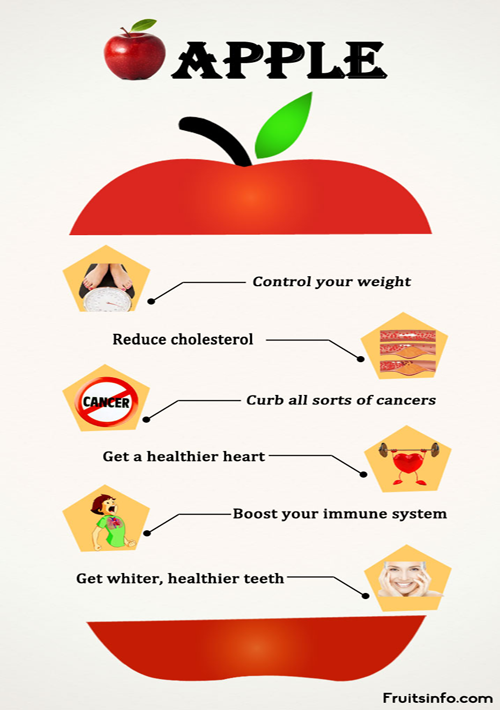
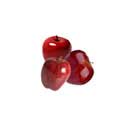 Apples are low in calories, good for weight control.
They are high in fiber which helps digestion.
Apples have no fat, no salt, and no cholesterol, making them heart-healthy.
B-complex vitamins (riboflavin, thiamin, and vitamin B-6) They contain natural sugar for quick energy, but don’t raise blood sugar too fast.
Most of the fiber is in the apple skin, so eating it with the peel is healthy.
Helps teeth by increasing saliva and cleaning the mouth a little
| Energy | 50 Kcal | 2.5% |
| Carbohydrates | 13.81 g | 11% |
| Protein | 0.26 g | 0.5% |
| Total Fat | 0.17 g | 0.5% |
| Cholesterol | 0 mg | 0% |
| Dietary Fiber | 2.40 g | 6% |
| Vitamins | ||
|---|---|---|
| Folates | 3 µg | 1% |
| Niacin | 0.091 mg | 1% |
| Pantothenic acid | 0.061 mg | 1% |
| Pyridoxine | 0.041 mg | 3% |
| Riboflavin | 0.026 mg | 2% |
| Thiamin | 0.017 mg | 1% |
| Vitamin A | 54 IU | 2% |
| Vitamin C | 4.6 mg | 8% |
| Vitamin E | 0.18 mg | 1% |
| Vitamin K | 2.2 µg | 2% |
| Electrolytes | ||
| Sodium | 1 mg | 0% |
| Potassium | 107 mg | 2% |
| Minerals | ||
| Calcium | 6 mg | 0.6% |
| Iron | 0.12 mg | 1% |
| Magnesium | 5 mg | 1% |
| Phosphorus | 11 mg | 2% |
| Zinc | 0.04 mg | 0% |
| Phyto-nutrients | ||
| Carotene-ß | 27 µg | -- |
| Crypto-xanthin-ß | 11 µg | -- |
| Lutein-zeaxanthin | 29 µg | -- |
| Varieties of Apples |


For more varieties of apple, click the following link
Here is Brief Description about the Health Benefits of Apples.
Often called as the "nutritional powerhouse", the potential health benefits they bring, with links to better and best health, together with prevention of many diseases. The vitamins present in apple are the key in maintaining red blood cells and the nervous system in good health.

Apples contain antioxidant such as polyphenol and flavonoid that reduces the risk of of cancer.
Apart from all this, there are countless health benefits one can enjoy consuming apples.
 Application of apple pulp on the face cures and improves acne.Keeping the apple pulp on the eyelids for 15 to 20 minutes reduces strain of the eyes.Paste made up apple leaves and used as shampoo cures dandruff, prevents hair fall and promotes hair growth.

Apples are readily available in stores, but selecting the best ones is important to enjoy their full flavor. Choose apples that are fresh, firm, and bright-textured, and avoid those with marks or blemishes, as these indicate mottled pulp or possible internal damage.
Depending on how they will be used—whether for eating fresh, cooking, canning, freezing, or making dishes—the variety and quality should be considered. In terms of storage, apples can be kept at room temperature for a few days, while refrigeration allows them to last for two to three weeks.
It is important to handle apples gently, because bruised apples release higher amounts of ethylene gas, which can accelerate the ripening and spoilage of other apples nearby. Regularly removing any bruised or damaged apples helps maintain the freshness and shelf life of the rest.
Probably you would have heard the saying, "one bad apple spoils the whole bunch." Likewise, an apple that has been bruised will discharge unusual amounts of ethylene gas, posing threat to other apples that have not been spoiled. Decreasing the shelf life of other apples, for this reason, it is imperative to handle apples with gentle care, while taking out any bruised apples from groups of apples stored.
Fresh fruits are a vital and palatable part of a healthful diet. Recommended methods of washing those fresh produces highly depend on the characteristics and type of the produce. When the fruit grows, harmful substances come into contact which includes soil, water, farm workers and animals. Once, the harvesting is done, the produce will pass through several sets of hands which has the potential to contaminate the fresh produce with harmful bacteria and germs.
Washing produces as it is meant to be is very important, on the other hand, doing so, may promote bacterial growth and speed up spoilage, thus it is often recommended to take some time before you wash your fruits and vegetables just before use. Commonly, if you chose to wash before storing, ensure that you dry it thoroughly with clean paper towels before storing.
 Trim off its top.
Wash the apples in running water.
Scrub it out to remove waxy preservative.
The stems ensnare dirt and bacteria so cut both ends before eating and scrub it lightly.
Apart from removing bacteria, fungi and garden pests, it helps in removal of residual pesticides.
The skin packs most of the fiber, so in order to get maximum health-benefits consider eating it with its peel.
Enzymatic brownish discoloration- Apples when cut, its exposure to air will turn brown. When you want to serve them sliced, ensure that you rinse those slices in water added with some drops of lemon.
Exciting and quick serving ideas
 Diced Apples can be enjoyed with ice-cream, yogurts, cereals, confectioneries, etc,
You can add the apple cubes to your fresh salads
Apple with little cinnamon can add flavor to your honey pecan chicken salad
You can make apple pie
Based on the variety of the apple and where they are grown, these apples are harvested between January and October in Australia. Coming to the availability factor, based on its variety and cultivation, they are available all year round.
Following are some of the factors that indicate the harvesting time of the apple and it includes:
Color
Firmness
Ease of picking
Key to a long life for apples are picking at the proper time and storing correctly. Coming to the harvesting of apples, it simply depends on the time the tree is in bloom and the climatic conditions during the budding season. There are certain factors that delay the maturity of fruit and it includes Cloudy, cool conditions or drought conditions. Home-grown apples should be harvested when they reach minimum maturity but are not yet ripe. This is because, at minimum maturity period, the apples will be firm and crisp. It is proper storage that helps preserve the quality of the fruit by slowing ripening and reducing water loss.
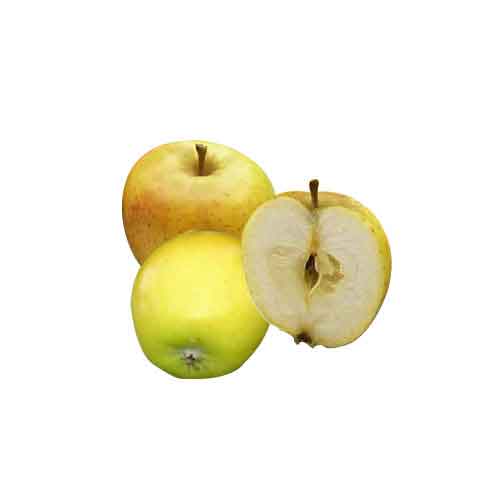
Ananasrenette
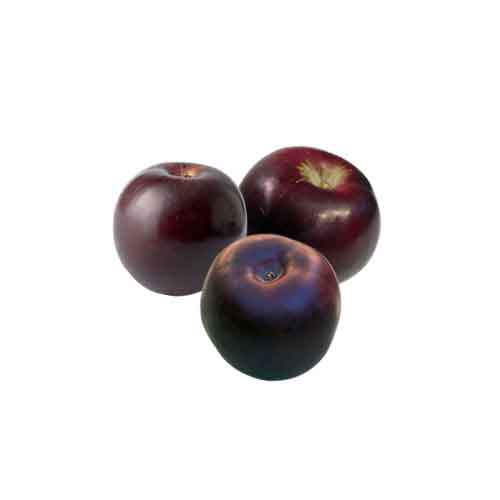
Arkansas Black
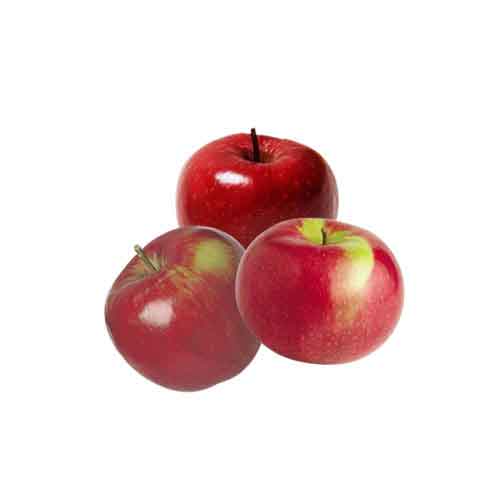
Bonza apple
Braeburn apple
Bramley
Fuji apple

Gala apple
Gold delicious apple
Goldrenette
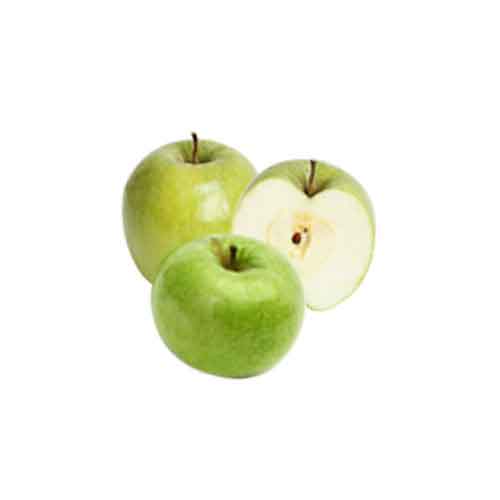
Granny smith apple
Jonagold
Jonathan apple
Lobo
McIntosh

Pacific rose
Cripps pink apple
Red delicious apple
Yellow Transparent
With over 7500 varieties of apples known, there are a set of few that are prominent and its flavors range from super-sweet to a bit more pucker-inducing. Following are some of the popular top 9 varieties and it includes:
 Ananasrenette
Ananas Reinette is a heritage apple variety originating in the Netherlands around 1821. It is a small to medium-sized apple with greenish-yellow skin that develops golden tones and russet freckles as it ripens. The flesh is fine-grained, crisp, and juicy, with a balanced sweet-tart flavor that develops distinctive pineapple-like aromatic notes during storage.
This apple is versatile, suitable for fresh eating, baking, cooking, making sauces or jams, and juicing. The trees are moderately vigorous with an upright, open habit and are self-sterile, requiring another compatible apple variety for pollination. Known for its long storage life and unique aromatic flavor, Ananas Reinette is valued as a gourmet and heritage apple, commonly grown in home gardens or small orchards rather than commercial farms.
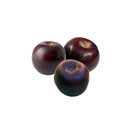 Arkansas Black
Arkansas Black apples is a heritage apple variety that originated in the United States, in Benton County, Arkansas, around the late 19th century. It produces medium to medium-large fruits with very dark red, almost black skin, and firm, dense flesh. When freshly picked, the apples are extremely hard and tart, but their flavor mellows and develops a rich, sweet-tart balance with complex aromatic notes if stored for several weeks or months.
This late-season apple is highly valued for its long storage life, often keeping quality for 4–6 months or longer under proper conditions. Arkansas Black is versatile, suitable for fresh eating after storage, baking, cooking, making cider, juice, or preserves. Its distinctive dark color, crisp texture, and excellent storage capacity make it a popular heritage variety among home gardeners and specialty orchards.
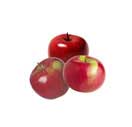 Bonza apple
Bonza is an Australian apple variety that originated as a chance seedling in the Batlow region of New South Wales in the 1950s. It produces medium to large fruits that are slightly flat-rounded in shape, with pale green or cream skin overlaid by a strong red blush. The flesh is very white, firm, crisp, and juicy, with a sweet, pleasant flavor.
Bonza apples are primarily suited for fresh eating, fruit salads, slicing, and desserts, and can also be used for cooking or making sauces. The tree is moderately vigorous, productive, and relatively disease-resistant, making it suitable for home orchards. As an early-season apple, it is harvested around March–April in Australia and stores well for a reasonable period post-harvest. Its combination of crisp texture, sweet flavor, good storage, and ease of cultivation makes it a versatile and valued local variety.
 Braeburn apple
Braeburn is an apple variety from New Zealand. The apples are medium to large, firm, and crisp, with yellow-green skin and red streaks. They are juicy with a sweet-tart flavor, making them good for eating fresh or for cooking, baking, and salads. The trees grow well in temperate climates, and the apples can be stored for several months.
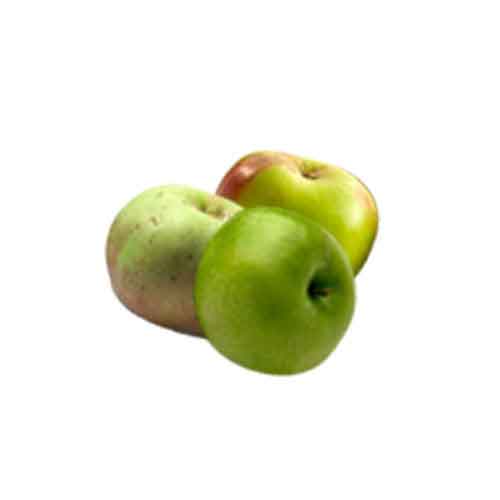
 Bramley
Bramley is a traditional English apple, mainly grown for cooking rather than eating fresh. The apples are large, green, and slightly tart, with firm flesh that becomes soft and fluffy when cooked. Bramleys are ideal for pies, sauces, and jams because of their strong flavor and excellent cooking qualities. The trees are hardy and productive, and the apples can be stored for several months in cool conditions.
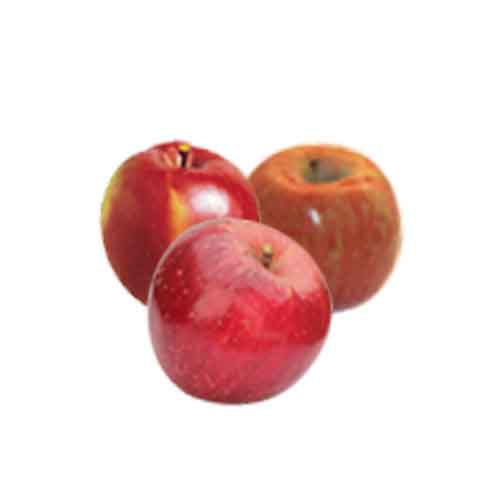
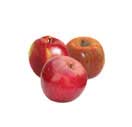 Fuji apple
Fuji is a popular apple variety that originated in Japan. The apples are large, crisp, and juicy, with a sweet flavor and a dense, firm texture. The skin is usually red with yellow or green undertones. Fuji apples are great for eating fresh, as well as for salads and desserts. The trees are productive and the apples have a long shelf life, making them ideal for storage and commercial use.
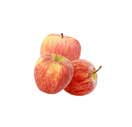 Gala apple
Gala is a sweet and mild-flavored apple that originated in New Zealand. The apples are small to medium-sized, with a thin skin that is yellow-orange with red stripes. They are crisp, juicy, and best eaten fresh, though they can also be used in salads and desserts. Gala apples are easy to grow, productive, and have a moderate shelf life.
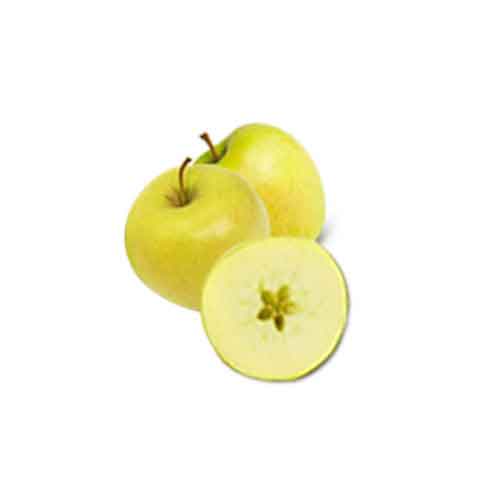
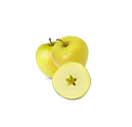 Golden delicious apple:
Golden delicious apple is a popular apple variety that originated in the United States. The apples are medium to large, with smooth yellow skin and a sweet, mild flavor. They are crisp, juicy, and versatile, suitable for eating fresh, cooking, baking, and making sauces. The trees are productive, and the apples have good storage life when kept in cool conditions.
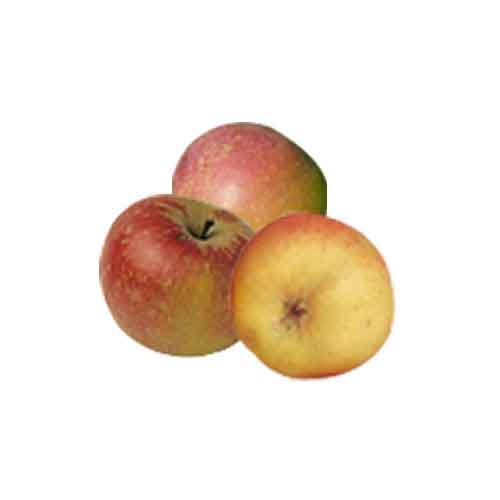
 Goldrenette
Goldrenette is an old European apple variety known for its aromatic flavor. The apples are small to medium-sized, with yellow-green skin often tinged with red, and have firm, crisp flesh. They have a balanced sweet-tart taste and are suitable for fresh eating, cooking, and making sauces or preserves. The trees are moderately vigorous and productive, and the apples store well under cool conditions.
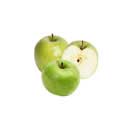 Granny smith apple
Granny Smith is a green apple variety that originated in Australia. The apples are medium to large, crisp, firm, and very tart, with a bright green skin. They are excellent for fresh eating, cooking, baking, pies, and salads. The trees are productive and hardy, and the apples have a good storage life, often keeping fresh for several months in cool conditions.
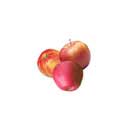 Jonagold
Jonagold is a popular apple variety that originated in the United States as a cross between Jonathan and Golden Delicious. The apples are large, with yellow-green skin and red streaks. They have a crisp, juicy texture and a sweet-tart flavor, making them suitable for fresh eating, baking, and cooking. The trees are productive, and the apples store well under cool conditions.
 Jonathan apple
Jonathan is an old apple variety from the United States. The apples are small to medium-sized, with bright red skin often over a yellow background. They have a crisp, juicy texture and a tart, slightly sweet flavor. Jonathans are excellent for fresh eating, baking, cooking, and making sauces. The trees are moderately vigorous and productive, and the apples store reasonably well under cool conditions.
 Lobo
Lobo
Lobo is a Canadian apple variety developed in the early 20th century. The apples are medium to large, round, and bright red, sometimes with yellow undertones. They have a crisp, juicy texture and a balanced sweet-tart flavor. Lobo apples are good for fresh eating, cooking, and baking. The trees are hardy, productive, and the apples have a moderate storage life under cool conditions.
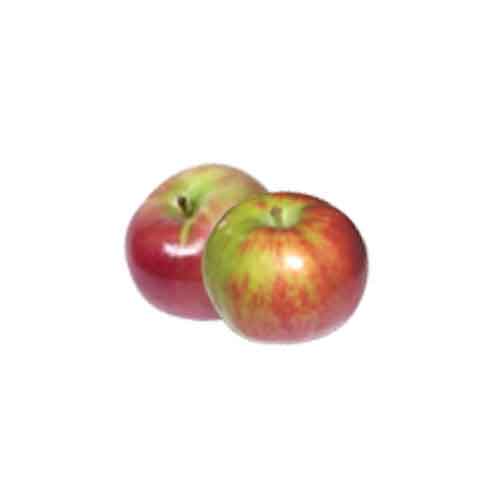
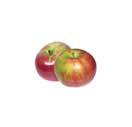 McIntosh
McIntosh is a classic apple variety from Canada. The apples are medium-sized with red and green skin. They have soft, juicy flesh and a sweet-tart flavor. McIntosh apples are best for fresh eating, making applesauce, and cooking. The trees are hardy and productive, but the apples have a shorter storage life compared to firmer varieties.
 Pacific rose
Pacific Rose is a sweet apple variety from New Zealand. The apples are medium to large, with pink to red skin over a yellow background. They are crisp, juicy, and very sweet, making them ideal for fresh eating. The trees are productive, and the apples have a good storage life under cool conditions.
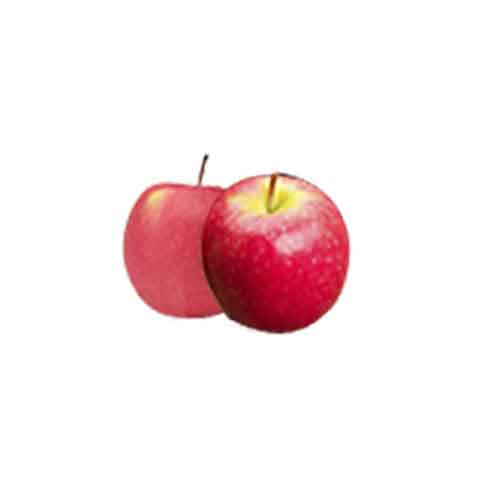
 Cripps pink apple
Cripps Pink is an apple variety from Australia, best known commercially as Pink Lady. The apples are medium to large, with pinkish-red skin over a yellow-green background. They are crisp, juicy, and have a sweet-tart flavor, making them great for fresh eating. The trees are productive, and the apples have a long storage life when kept in cool conditions.
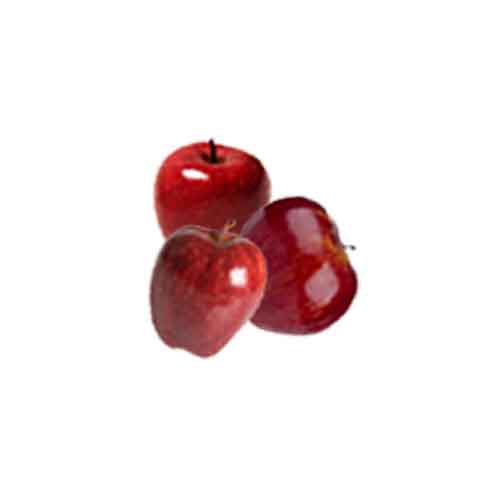
Red delicious apple
Discovered in 1875, the red delicious apple varieties grew on Jesse Hiatt's farm in Peru, Iowa. Having considered it as a nuisance, hiatt decided to chop down sapling, but the growth was enormous. Finally he decided to let it grow.
The grown apples called Hawkeye were displayed in a fruit show in Missouri; Stark Brothers Nursery purchased the rights to market it and replaced the name Hawkeye with Red Delicious apple.
It has a highly aromatic flavor which features conical shape and it is deep to bright red in color. Harvested in Washington State in the fall, these apples are best for snacking and making salads.
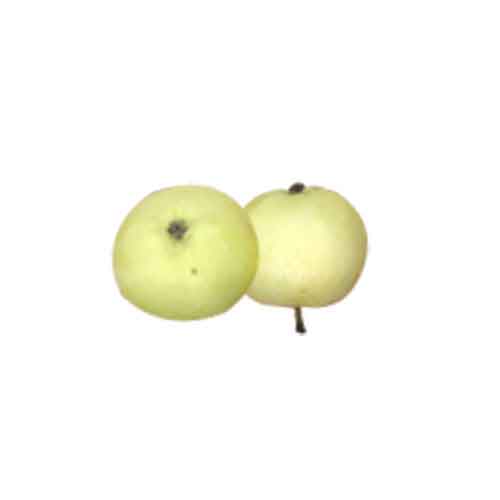
 Yellow Transparent
Yellow Transparent is an early-season apple variety from Russia. The apples are small to medium, with pale yellow skin and soft, juicy flesh. They have a tart flavor and are mainly used for cooking, making applesauce, or preserves. The trees are hardy, productive, and the apples have a short storage life.



Reviewed By: m.g.reddy
Comments: keep updating on locally available seasonal f