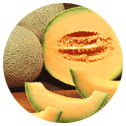






 Full List of Fruits Cantaloupe
Cantaloupe


Nutrition Information of Cantaloupe
Principle |
Nutrient Value |
Percentage of RDA |
Energy |
34 Kcal |
1.5% |
Carbohydrates |
8.6 g |
6.5% |
Protein |
0.84 g |
1.5% |
Total Fat |
0.19 g |
<1% |
Cholesterol |
0 mg |
0% |
Dietary Fiber |
0.9 g |
2.25% |
Vitamins |
||
Folates |
21 µg |
5% |
Niacin |
0.734 mg |
4.5% |
Pantothenic acid |
0.105 mg |
2% |
Pyridoxine |
0.072 mg |
5.5% |
Riboflavin |
0.026 mg |
2% |
Thiamin |
0.017 mg |
1% |
Vitamin A |
3382 IU |
112% |
Vitamin C |
36.7 mg |
61% |
Vitamin E |
0.05 mg |
0.5% |
Vitamin K |
2.5 mcg |
2% |
Electrolytes |
||
Sodium |
1 mg |
0% |
Potassium |
267 mg |
6% |
Minerals |
||
Calcium |
9 mg |
1% |
Copper |
41 µg |
4.5% |
Iron |
0.21 mg |
2.5% |
Magnesium |
12 mg |
3% |
Manganese |
0.041 mg |
2% |
Zinc |
0.18 mg |
1.5% |
How to buy fresh Cantaloupe?
Cantaloupe, generally available from May through September, are produced principally in California, Arizona, and Texas. Some are also imported early in the season.
Purchase cantaloupes that are not bruised or damaged. If buying fresh-cut cantaloupe, be sure it is refrigerated or surrounded by ice.After purchase, refrigerate cantaloupes promptly. Wash hands with hot, soapy water before and after handling fresh cantaloupes. Scrub whole cantaloupes by using a clean produce brush and cool tap water immediately before eating. Don't use soap or detergents.
Look for: There are three major signs of full maturity. First, the stem should be gone, leaving a smooth symmetrical, shallow base called a “full slip.” If all or part of the stem base remains, or if the stem scar is jagged or torn, the melon is probably not fully matured. Second, the netting, or veining, should be thick, coarse, and corky, and should stand out in bold relief over some part of the surface. Third, the skin color (ground color) between the netting should have changed from green to yellowish-buff, yellowish gray, or pale yellow.
Signs of ripeness: A cantaloupe might be mature, but not ripe. A ripe cantaloupe will have a yellowish cast to the rind, have a pleasant cantaloupe aroma, and yield slightly to light thumb pressure on the blossom end of the melon. Most cantaloupe are quite firm when freshly displayed in retail stores. While some may be ripe, most have not yet reached their best eating stage. Hold them for 2 to 4 days at room temperature to allow completion of ripening. After conditioning the melons, some people like to place them in the refrigerator for a few hours before serving.
Avoid: Overripeness is indicated by a pronounced yellow rind color, a softening over the entire rind, and soft, watery, and insipid flesh. Small bruises normally will not hurt the fruit, but large bruised areas should be avoided, since they generally cause soft, watersoaked areas underneath the rind. Mold growth on the cantaloupe (particularly in the stem scar, or if the tissue under the mold is soft and wet) is a sign of
decay.