|
|
|
|
Home » Eat fruits
|
Eat Fruits for Robust Health |
| "Eat your fruits and vegetables"
is one of the tried and true recommendations
for a healthy diet. And for good reason.
Eating plenty of vegetables and fruits can
help you ward off heart disease and stroke,
control blood pressure, prevent some types
of cancer, avoid a painful intestinal ailment
called diverticulitis, and guard against
cataract and macular degeneration, two common
causes of vision loss.
 Fruit
is one of the most healthy and natural food
available to man. There are many different
types of fruits and almost all of them provide
us with strong health benefits. Fruit contains
a large number of naturally occurring vitamins,
minerals and plant phyto-chemicals that
help us prevent many ailments and eyesight
orders. Fruit
is one of the most healthy and natural food
available to man. There are many different
types of fruits and almost all of them provide
us with strong health benefits. Fruit contains
a large number of naturally occurring vitamins,
minerals and plant phyto-chemicals that
help us prevent many ailments and eyesight
orders.
Eat all varieties of fruits
in good quantities and as often as possible
- is what most doctors ad healthcare specialists
recommend. Consuming plenty of fruits can
prevent heart disease, cardiac stroke, certain
types of cancer, intestinal ailments cataract
and retinal problems. Regular eating of
fruits also helps to keep blood pressure
under control.
There is strong evidence
to suggest that a diet rich in fruits can
considerably lower the risk of heart diseases.
A
comprehensive report prepared
by the Harvard-based Nurses' Health Study
and Health Professionals Follow-up Study,
included almost 110,000 men and women whose
dietary habits were followed for 14 years.
They found that the higher the average daily
consumption of fruits, the lower the chances
of developing cardiovascular disease. Regular
intake of sufficient quantities of fruits
can be a very effective for lowering blood
pressure.
Several studies have revealed
that regular consumption of fruits acts
against occurrence of cancer. A likely possibility
is that some types of fruits may protect
against certain cancers particularly cancer
of the mouth, throat, voice box, esophagus,
and stomach; fruit probably also protects
against lung cancer.
One of the valuable components
of fruits is fiber. As fiber passes through
the digestive system, it sops up water like
a sponge and expands. This can calm the
irritable bowel, trigger regular bowel movements
and prevent or relieve constipation
Eating plenty of fruits
regularly also keeps your eyes healthy and
vision in good shape. Fruits help to prevent
cataract and macular degeneration the two
common eye diseases that afflict millions
of Americans over age 65.
Fruit are also immensely
helpful for obese people wanting to shed
weight. Energy consumption is thought to
be mainly influenced by the palatability,
fiber content, density of energy and the
variety of foods. Eating fruit has the benefit
of affecting some these factors. Fruits
are also low in sodium which helps to lessen
the chance of gaining water weight. If you
are eating about one-third of the diet as
fruits and vegetables, then there should
be a steady weight loss because the large
quantity of fruit consumption also helps
to fill the stomach faster.
|
|
|
| Vegetables, Fruits, and Cancer |
|
 Numerous
early studies revealed what appeared to
be a strong link between eating fruits and
vegetables and protection against cancer.
But because many of these were case-control
studies, where people who already have a
certain health outcome (cases) are compared
to people who do not have that outcome (controls),
it is possible that the results may have
been skewed by problems inherent in these
types of studies; people with illnesses,
for example, often recall past behaviors
differently from those without illness,
which can lead to potential inaccuracy in
the information that they provide to study
investigators. Cohort studies, which follow
large groups of initially healthy individuals
for years, generally provide more reliable
information than case-control studies because
they don't rely on information from the
past. And data from cohort studies have
not consistently shown that a diet rich
in fruits and vegetables prevents cancer
in general.. A more likely possibility is
that some types of fruits and vegetables
may protect against certain cancers. A massive
report by the World Cancer Research Fund
and the American Institute for Cancer Research
suggests that non-starchy vegetables-such
as lettuce and other leafy greens, broccoli,
bok choy, cabbage, as well as garlic, onions,
and the like-and fruits "probably" protect
against several types of cancers, including
those of the mouth, throat, voice box, esophagus,
and stomach; fruit probably also protects
against lung cancer. Three tomatos Specific
components of fruits and vegetables may
also be protective against cancer. For example,
a line of research stemming from a finding
from the Health Professionals Follow-up
Study suggests that tomatoes may help protect
men against prostate cancer, especially
aggressive forms of it. Numerous
early studies revealed what appeared to
be a strong link between eating fruits and
vegetables and protection against cancer.
But because many of these were case-control
studies, where people who already have a
certain health outcome (cases) are compared
to people who do not have that outcome (controls),
it is possible that the results may have
been skewed by problems inherent in these
types of studies; people with illnesses,
for example, often recall past behaviors
differently from those without illness,
which can lead to potential inaccuracy in
the information that they provide to study
investigators. Cohort studies, which follow
large groups of initially healthy individuals
for years, generally provide more reliable
information than case-control studies because
they don't rely on information from the
past. And data from cohort studies have
not consistently shown that a diet rich
in fruits and vegetables prevents cancer
in general.. A more likely possibility is
that some types of fruits and vegetables
may protect against certain cancers. A massive
report by the World Cancer Research Fund
and the American Institute for Cancer Research
suggests that non-starchy vegetables-such
as lettuce and other leafy greens, broccoli,
bok choy, cabbage, as well as garlic, onions,
and the like-and fruits "probably" protect
against several types of cancers, including
those of the mouth, throat, voice box, esophagus,
and stomach; fruit probably also protects
against lung cancer. Three tomatos Specific
components of fruits and vegetables may
also be protective against cancer. For example,
a line of research stemming from a finding
from the Health Professionals Follow-up
Study suggests that tomatoes may help protect
men against prostate cancer, especially
aggressive forms of it.
One of the pigments that
give tomatoes their red hue-lycopene-could
be involved in this protective effect. Although
several studies other than the Health Professionals
study have also demonstrated a link between
tomatoes or lycopene and prostate cancer,
others have not or have found only a weak
connection. Taken as a whole, however, these
studies suggest that increased consumption
of tomato-based products (especially cooked
tomato products) and other lycopene-containing
foods may reduce the occurrence of prostate
cancer. Lycopene is one of several carotenoids
(compounds that the body can turn into vitamin
A) found in brightly colored fruits and
vegetables, and research suggests that foods
containing carotenoids may protect against
lung, mouth, and throat cancer. But more
research is needed before we know the exact
relationship between fruits and vegetables,
carotenoids, and cancer. |
| Foods to Choose
|
|
"Ten foods have been labeled 'super foods'
by the American Cancer Society because of
their cancer-fighting abilities." Try to
incorporate these foods into your diet whenever
you can: |
- Berries (raspberries, blueberries, etc.)
- Broccoli
- Cold water fish (salmon, tuna)
- Flax seed (use as a food additive or
in bread)
- Legumes ("Go meatless at least once
a week," McDowell said.)
- Low-fat dairy products
- Spinach (fresh)
- Soy foods such as tofu; although "You
may want to avoid soy foods if you have
breast cancer. There is a potential relationship
between the two," McDowell said.
- Sweet potatoes/pumpkin/squash (rich
in Vitamin A or Beta Carotene)
- Walnuts (rich in Omega 3 fatty acids)
"Buy fresh food as often
as possible. Learn to read product labels
because they can help you choose foods that
are better for you." |
| Cancers Linked to Diet
|
|
 The
largest body of evidence relating vegetable
and fruit consumption to health has examined
effects on cancer risk. The most extensive
review to date has been published by an
international interdisciplinary panel convened
by the World Cancer Research Fund (WCRF).
This review concluded that, "Overall, when
cancers of all anatomical sites are taken
together, 78 percent have shown a significant
decrease in risk for higher intake of at
least one vegetable and/or fruit category
examined." The review identified 217 observational
epidemiologic studies that evaluated at
least one association of fruit or vegetable
intake with incidence of any type of cancer.
For a variety of variables describing vegetable
consumption, 69 to 80 percent of studies
found an inverse association with cancer
risk. For fruit in general and citrus fruit
in particular, 64 and 66 percent of studies,
respectively, found an inverse association
with cancer risk. In keeping with established
criteria for the evaluation of epidemiologic
research, evidence was considered conclusive
(termed "convincing" in the WCRF report)
if there were an adequate number (at least
20) of relevant studies, including some
with prospective designs.a The WCRF panel
also required that studies be conducted
in diverse populations, with control for
important potential confounding factors.
For example, because higher vegetable and
fruit consumption is often correlated with
lower fat intake and is more often observed
in nonsmokers, the possible effects of fat
intake and of smoking on cancer risk had
to be considered in the design and analysis
of studies of the effect of vegetable and
fruit intakes on cancer risk. The overall
body of evidence demonstrated conclusively
that vegetables and fruit protect against
cancer. The evidence was most conclusive
for vegetables and fruit and cancers of
the mouth and pharynx, esophagus, lung,
and stomach and for vegetables alone and
cancers of the colon and rectum. The association
of vegetables and fruit with cancer incidence
was judged to be strong, particularly for
vegetables, with about a halving of risk
overall found to be associated with consuming
at least 5 servings of vegetables and fruit
per day as compared to only 1 or 2 servings. The
largest body of evidence relating vegetable
and fruit consumption to health has examined
effects on cancer risk. The most extensive
review to date has been published by an
international interdisciplinary panel convened
by the World Cancer Research Fund (WCRF).
This review concluded that, "Overall, when
cancers of all anatomical sites are taken
together, 78 percent have shown a significant
decrease in risk for higher intake of at
least one vegetable and/or fruit category
examined." The review identified 217 observational
epidemiologic studies that evaluated at
least one association of fruit or vegetable
intake with incidence of any type of cancer.
For a variety of variables describing vegetable
consumption, 69 to 80 percent of studies
found an inverse association with cancer
risk. For fruit in general and citrus fruit
in particular, 64 and 66 percent of studies,
respectively, found an inverse association
with cancer risk. In keeping with established
criteria for the evaluation of epidemiologic
research, evidence was considered conclusive
(termed "convincing" in the WCRF report)
if there were an adequate number (at least
20) of relevant studies, including some
with prospective designs.a The WCRF panel
also required that studies be conducted
in diverse populations, with control for
important potential confounding factors.
For example, because higher vegetable and
fruit consumption is often correlated with
lower fat intake and is more often observed
in nonsmokers, the possible effects of fat
intake and of smoking on cancer risk had
to be considered in the design and analysis
of studies of the effect of vegetable and
fruit intakes on cancer risk. The overall
body of evidence demonstrated conclusively
that vegetables and fruit protect against
cancer. The evidence was most conclusive
for vegetables and fruit and cancers of
the mouth and pharynx, esophagus, lung,
and stomach and for vegetables alone and
cancers of the colon and rectum. The association
of vegetables and fruit with cancer incidence
was judged to be strong, particularly for
vegetables, with about a halving of risk
overall found to be associated with consuming
at least 5 servings of vegetables and fruit
per day as compared to only 1 or 2 servings.
The specific evidence of
a dose-response, in which increasing intakes
confer increasing protection in a graded
manner, adds to the strength of the case
for vegetable and fruit intakes. Such a
dose-response was shown convincingly in
several examples in the WCRF report. For
example, for lung cancer, there was a halving
of the relative risk as intakes increased
from 150 to 400 grams (g) per day (i.e.,
from about 2 to about 5 servings per day,
assuming 80 g per serving). Similar dose-response
relations were noted for stomach cancer
and both vegetables and fruit. Because the
upper limit of the dose-response range that
can be evaluated is limited by the ranges
of intakes in populations studied, few data
exist to support specific, quantitative
recommendations for intakes of vegetables
or fruit above 350 or 400 g per day.
The hypothesis that increasing
vegetable and fruit intakes reduces cancer
risk was not confirmed in one randomized
trial. The U.S. Polyp Prevention Trial (PPT)
tested the ability of dietary changes that
included increasing vegetable and fruit
intake (3.5 servings per 1,000 kcal) to
prevent the recurrence of colorectal adenomas
over 4 years of follow up. However, it was
not designed to isolate the effect of changes
in vegetable and fruit intake from the other
changes targeted (e.g., increased whole
grain intake and lower fat intake). In any
case, the trial found that there was no
difference in the recurrence of adenomas
between the intervention and control groups.
Thus, in the particular cancer-risk situation
tested in the PPT, neither the increase
in vegetable and fruit intake (about 2 servings
per day), nor any of the other dietary changes,
had a protective effect. This finding does
not, however, rule out protection by vegetables
and fruit against other types of cancers
or in populations with different colon cancer
risk profiles. It also is not clear whether
a longer observation period or dietary changes
earlier in life might yield significant
risk reduction.
The lack of human experimental
data leaves open the question of whether
vegetables and fruit might only be a marker
for some other aspect of dietary or lifestyle
behavior with which they are closely correlated.
However, the consistency of the association
of vegetable and fruit intakes with cancer
risk in populations with diverse lifestyles
supports the conclusion that vegetables
and fruit per se are responsible for the
effect.
An
important conclusion of the WCRF
review was that the evidence supported a
broad recommendation for increasing vegetable
and fruit consumption for reducing cancer
risk, rather than recommendations for specific
types of vegetables and fruit. The numerous
imperfections in the evidence base were
acknowledged, including the wide variability
in inclusion criteria, grouping, or specificity
when defining and measuring vegetable and
fruit intakes, as well as the possibility
of overreporting or overestimating absolute
intake levels. One reason that the recommendation
for vegetable and fruit consumption remains
broad is that the specific protective constituents
in vegetables and fruit, alone or in combination,
have not been identified with certainty.
Relevant substances in vegetables and fruit
include phytochemicals such as dithiolthiones,
flavonoids, glucosinolates, and allium compounds,
as well as carotenoids, other antioxidants,
vitamins, folate, and minerals such as selenium
and calcium. A large number of plausible
mechanisms can explain how these various
nutrients or bioactive constituents in vegetables
and fruit can prevent or arrest carcinogenesis,
and some are supported by animal and in
vitro experiments.
Testing hypotheses experimentally
requires large-scale, long-term studies
as well as a best guess about which set
of bioactive constituents to feed and at
what level. The dose of vegetables and fruit
associated with a particular effect can
be reasonably estimated, but the specificity
required to translate this information into
a dose of any particular constituent does
not exist in the present set of studies.
Because of these uncertainties, the null
findings of the chemoprevention trials of
beta carotene do not detract substantially
from the conclusion that vegetables and
fruit reduce cancer risk. These findings,
however, raise the question of whether any
single constituent of vegetables and fruit
or single pathway will be found responsible
for protection from cancer. Multiple agents
acting on multiple pathways, in parallel
or interactively, are probably responsible.
If so, the results of the chemoprevention
trials argue in favor of recommending vegetables
and fruit as foods, rather than attempting
to achieve the effect with vitamin or mineral
supplements.
Obesity is also a risk
factor for kidney, pancreatic, and oral/esophageal
cancers. "To reduce the fat in your diet,
choose more low-fat or fat-free dairy, legumes,
lean meats, poultry or fish. Skip rich sauces
that are made with butter, cream or mayonnaise,
and limit fried foods."
Diets rich in foods containing
vitamin A, vitamin C, and beta carotene
may also reduce the risk of certain cancers,
such as bladder, breast, colorectal, and
stomach cancer. Many vegetables and fruits
contain vitamins A and C and beta carotene,
such as dark green leafy vegetables, red,
yellow and orange vegetables and fruits
and citrus fruits and juices.
|
| Changing Your Habits
|
|
The benefits of a healthy
diet rich in fruits, vegetables and grains
are numerous. "Not only will you decrease
your risk of cancer, you will be able to
better manage your weight, and reduce your
risk of heart disease." .
Likewise, don't smoke.
Tobacco causes about one-third of all cancer
deaths - more than all the other reliably
known cancer causing agents added together,
according to the National Institutes of
Health. Heart disease and emphysema caused
by smoking kill even more people than cancer.
It takes years to form
bad habits, so don't expect to change them
overnight. Instead, consider some ongoing
changes. For example, add fruits and vegetables
gradually over a period of weeks. Each time
you shop, choose a low-fat dairy product
in place of one made with whole milk. Instead
of buying a loaf of white bread, try one
made with 100% whole grain flour such as
whole wheat or rye.
"It isn't necessary to
give up all the foods you like to help protect
yourself from cancer. Instead, try to increase
the number of times you choose foods that
may reduce your risk of cancer."
|
| Other Health Benefits |
|
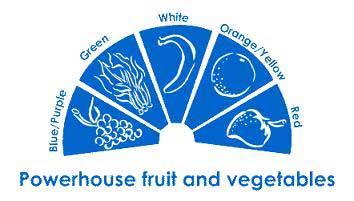 fruit_vegefruit_vegeEpidemiologic
studies also have demonstrated or suggested
associations of vegetables and fruit or
their constituents with reduction in risk
of cardiovascular disease (CVD, i.e., heart
disease, stroke, hypertension, atherosclerosis),
cataracts, chronic obstructive pulmonary
disease (COPD), and other conditions. For
example, Klerk et al. estimated that vegetable
and fruit consumption was associated with
a 20 to 40 percent reduction in the occurrence
of coronary heart disease (CHD) based on
a review of 12 epidemiologic studies conducted
after 1994. Ness and Powles also found a
reduced risk of CHD based on their review
of 39 studies. The inverse association of
vegetables and fruit or, from the Nurses'
Health Study, vegetables alone, with stroke
may be even larger than that for CHD. The
evidence supporting a role for constituents
of vegetables andfruit in protection against
the development of cataracts and COPD has
increased in recent years, and vegetables
and fruit also may confer protection from
conditions such as diabetes mellitus and
diverticulosis because of their high content
of dietary fiber. fruit_vegefruit_vegeEpidemiologic
studies also have demonstrated or suggested
associations of vegetables and fruit or
their constituents with reduction in risk
of cardiovascular disease (CVD, i.e., heart
disease, stroke, hypertension, atherosclerosis),
cataracts, chronic obstructive pulmonary
disease (COPD), and other conditions. For
example, Klerk et al. estimated that vegetable
and fruit consumption was associated with
a 20 to 40 percent reduction in the occurrence
of coronary heart disease (CHD) based on
a review of 12 epidemiologic studies conducted
after 1994. Ness and Powles also found a
reduced risk of CHD based on their review
of 39 studies. The inverse association of
vegetables and fruit or, from the Nurses'
Health Study, vegetables alone, with stroke
may be even larger than that for CHD. The
evidence supporting a role for constituents
of vegetables andfruit in protection against
the development of cataracts and COPD has
increased in recent years, and vegetables
and fruit also may confer protection from
conditions such as diabetes mellitus and
diverticulosis because of their high content
of dietary fiber.
Using the criteria for
inferring causality employed in the WCRF
review, the literature on the association
between vegetables and fruit and these other
health outcomes must be considered less
comprehensive and less convincing than that
for cancer. However, this additional literature
is important in several respects. It extends
the rationale for increasing vegetable and
fruit consumption to include protection
from CVD, which is the major cause of premature
death in most populations. In addition,
because CVD is more common than cancer and
because intermediate variables that can
serve as surrogate CVD endpoints have been
characterized, clinical trials can be conducted
to directly ascertain whether increasing
vegetable and fruit intakes will reduce
CVD risks. One such trial, the Dietary Approaches
to Stop Hypertension (DASH) trial, demonstrated
large reductions in blood pressure in association
with either of two diets that were high
in vegetables and fruit. The broader evidence
also confirms that health effects, when
observed across a variety of outcomes, are
consistently in a protective direction.
This evidence eliminates any concern that
recommending increased consumption to prevent
cancer would elevate the risks of some other
condition.
|
| The Evidence That Vegetables and Fruits Protect Health
|
|
When the 5
A Day Program was first developed, the
recommendation to consume at least 5 servings
of vegetables and fruit per day was supported
by a diverse and convincing body of evidence.
No subsequent finding has contradicted this
conclusion. Indeed, since the start of the
5 A Day Program, further evidence has accumulated
to support the hypothesis that a diet rich
in vegetables and fruit reduces the risk
of cancer and other chronic diseases. Specifically,
the evidence for an inverse association
with the risk of several epithelial cancers
has been strengthened, evidence has begun
to accumulate for hormone-dependent cancers,
and a variety of mechanisms have emerged
for the protective effect of specific constituents
in vege tables and fruit, not only in animal
studies, but also in humans.
Although evidence also
has emerged for a role of vegetables and
fruit in reducing the risk of cardiovascular
disease, obesity, and diabetes, the most
impressive body of evidence exists for protection
against cancer. The recommended 5 servings
of vegetables and fruit a day is a minimum
rather than a maximum target for consumption,
and any increase above current levels of
consumption is to be encouraged for individuals
and population. |
|
|

|
|
|
|
|
Special fruits for this week
|
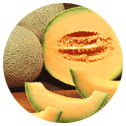
Cantaloupe |
Cantaloupe are served as fresh fruit or as salads or as a dessert with ice cream (Read more) » |
|
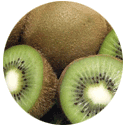
Kiwis |
kiwifruit will be fairly large and plump with thin "fuzzy" brown skin (Read more) » |
|
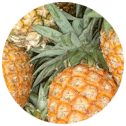
Pineapple |
|
Pineapple fruit is native to the Asian tropics, with a delicate and fresh fragrance
(Read more) » |
|
|
|
|
|
|
|
| |
|