






Kiwis
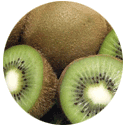
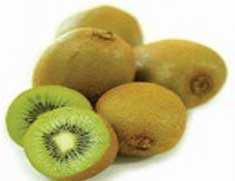
- Good-quality kiwifruit will be fairly large and plump with thin "fuzzy" brown skin.
- The flesh should be emerald green with tiny black edible seeds radiating from the center and have a mild, sweet flavor.
- Choose kiwifruit that is free of wrinkles. Wrinkles are an indication that water has been lost and, with it, both quality and nutrients have been affected.
- Additionally, choose kiwifruit that are free of soft spots, cuts, and bruises. Unripe fruit will be firm to the touch; ripe fruit will give to gentle pressure.
- Kiwis were first introduced to the UK in the 1970s. Since then it has become a popular fruit in the UK diet.
- A number of people have reported allergic reactions to kiwi fruit.
- Some of these reactions have been severe, especially in children, and the number of people reacting to kiwi fruit appears to be increasing.
- This may be linked to a general increase in allergic diseases, as well as kiwi fruit becoming more popular.
- In adults, allergy to kiwi normally appears in people who are allergic to latex or birch pollen, because these contain similar allergens to kiwi fruit. See the section on latex-food syndrome.
- In adults, the symptoms of kiwi allergy are normally quite mild, but in children the condition can be more serious and can occasionally cause anaphylaxis.
- Experts don't understand fully why adults and children seem to react differently to kiwi.
- It could be connected with the age at which they first began to eat kiwi, or it's possible that adults and children react to different allergens in the fruit.
- People who are allergic to kiwi should avoid the fruit (as raw fruit, puree or juice).
- Most people who have been eating kiwi on a regular basis are unlikely to react.
How to buy fresh Kiwis?
The kiwifruit is a relatively small, ellipsoid-shaped fruit with a bright green, slightly acid-tasting pulp surrounding many small, black, edible seeds, which in turn surround a pale heart. The exterior of the kiwifruit is unappealing to some, being somewhat "furry" and light to medium brown in color. (While the furry
skin is edible, some prefer to peel the fruit before eating.) Domestic kiwifruit is produced primarily in California, but imported kiwifruit is also commonly marketed.
Look for: Plump, unwrinkled fruit, either firm or slightly yielding. Kiwifruit is fully ripe when it is yielding to the touch but not soft. Firm kiwifruit can be ripened at home in a few days by leaving it at room
temperature. Use of a ripening bag or bowl will speed the process.
Avoid: Fruit that shows signs of shriveling, mold, or excessive softening, all of which indicate spoilage. Some kiwifruit may appear to have a "water-stained" exterior. This is perfectly normal for the fruit and does not affect interior quality in any way.
Note: Kiwifruit contains an enzyme, actinidin, similar to papain in papayas, that reacts chemically to break down proteins. (It has been used as a "secret ingredient" to tenderize meat.) Actinidin prevents gelatin from setting, so if you are going to serve kiwifruit in a gelatin dish, cook the fruit for a few minutes before adding it to the gelatin.