






FLESHY MULTIPLE FRUITS
 Figs
Figs

Fig fruits are bell-shaped, with a wide, flat bottom narrowing to a pointed top. When the fruit ripens, the top may bend, forming a "neck." Figs can be brown, purple, green, yellow or black, and vary in size. The skin is slightly wrinkled and leathery. They are often dried for preservation, since the fresh fruits are highly perishable. The fig flowers develop inside the fruit and cannot be seen.
The edible fig is one of the first plants that were cultivated by humans.As the figs were of the parthenocarpic type, they are of an early domestic breed. The find predates the domestication of wheat, barley and legumes, and may thus be the first known instance of agriculture.Thousands of cultivars, most unnamed, have been developed or come into existence as human migration brought the fig to many places outside its natural range. It has been an important food crop for thousands of years, and was also thought to be highly effective in the diet.Figs are fat-free, sodium-free and, like other plant foods, cholesterol-free, Figs have the highest overall mineral content of all common fruits,Figs are high in fiber, providing 20% of the Daily Value --- more dietary fiber per serving than any other common dried or fresh fruit.
Pineapple
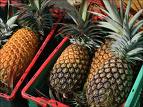
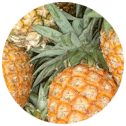
Pineapple, common name for a flowering plant family, characterized by unique water-absorbing leaf scales and regular three-parted flowers. The leaves are spirally arranged sheaths or blades, usually occurring in layers. The plant embryos have one seed leaf. The family, which contains more than 2000 species placed in 46 genera, is almost exclusively native to the tropics and subtropics of America, with one species occurring in western Africa. Many species are now cultivated around the globe, however. The most economically important species is the familiar pineapple. A few species are sources of fiber; others are cultivated for their showy flowers or foliage. The family constitutes an order, and the term bromeliad is used for its members.
Pineapple contains a proteolytic enzyme bromelain, which digests food by breaking down protein. Pineapple juice can thus be used as a marinade and tenderizer for meat. The enzymes in pineapples can interfere with the preparation of some foods, such as jelly or other gelatin-based desserts. The bromelain breaks down in the canning process, thus canned pineapple can generally be used with gelatin. These enzymes can be hazardous to someone suffering from certain protein deficiencies or disorders, such as Ehlers-Danlos syndrome. Pineapples should also not be consumed by those with Hemophilia or by those with kidney or liver disease, as it may reduce the time taken to coagulate a consumer's blood.