



|
|
|
|
|
|
 |
Peach |
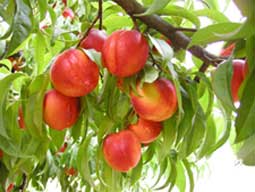
| Peaches are a native to China. Peaches are enjoyed in desserts and appetizers with a perfect combination of flavor and nutrition. They are a good source of fiber. Georgia ranks highest in its production of about 70% of the peach trees and 83% of the state's production.
|
Peaches are a native to China. Peaches are enjoyed in desserts and appetizers with a perfect combination of flavor and nutrition. They are a good source of fiber. Georgia ranks highest in its production of about 70% of the peach trees and 83% of the state's production.
First cultivation: Peaches were first cultivated in ancient China.
Introduction to Greece: Peaches were introduced in Greece around 322 B.C. First grown in Georgia: Peaches were first grown in Georgia during the colonial period of the 1700s.
Peach State: After the Civil war, Georgia peach cultivators came up with new peach varieties and started commercial business and made Georgia a Peach State. |
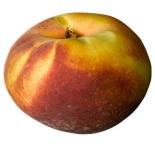
Peach types
|
Melting Flesh Peaches: Melting flesh type peaches have flesh that becomes soft over time. They have ragged edges when cut. They can be either clingstone or freestone type.
|
Non-melting peaches: (bottom-middle) Non melting peaches remain firm over time after canning. They are selected to have orange flesh color with no red, and a distinctive taste a little like apricots. Most of the commercial peaches are non-melting type.
All non-melting types are clingstone, meaning the flesh adheres to the pit when ripe. |
Peento peaches: Peento peaches are known for various color and flavours. Also known as Pan Tao or Peen To.
They are flat or doughnut shaped. (bottom-right).
|
Doughnut peaches: (bottom-left) This fruit is known for its unusual shape. It is flat and hollow on the sides, does not look like other varieties. Initially flat peaches originated in China and were grown in U.S in 1800. Originally the flat varieties had no special names.
They were called Chinese flat peaches, Chinese saucer peaches, or peento peaches. Today, they are called “donut peaches” and are grown commercially in Central California and Washington.
|
 Melting Flesh Peaches |
 Non-melting peaches |  Peento peaches
|

Yellow-Flesh Peaches
|
Origin of yellow Flesh peaches:
In 1949, three yellow peaches were collected from among various whilte fleshed peaches which had fallen beneath a seedling tree. The tree was a cross between Eclipse (a yellow variety) and a seedling caucausian peach. The caucausian peach itself would produce small white fleshed fruits. The small branch which produced the yellow fruit was not identified that time. Later in 1950, the branch which produced the yellow variety was identified and labeled. |
| Taste:The yellow flesh peaches tend to have a more Acidic tang than the white flesh peaches. |
| Season: May - Sept |
| Popular Varieties: Reliance and Sweet Scarlet |
|

White-Flesh Peaches |
| Taste |
They taste sweet to less acidic and smoother with white flesh |
| Season |
They are abundantly available during the months May - Aug |
| Mostly available |
Western markets, in Asia |
| Popular Varieties |
Spring Snow and Sugar May |
| Skin texture |
Soft texture, creamy or yellow with red or pink color near the pit |
|

Clingstone Peaches |
| Clingstone peaches have flesh that adheres to the pits. |
| Taste |
Sweeter and juicier |
| Season |
May - Aug |
| Mostly available |
Rarely found in the local market |
| Skin texture |
Soft texture, flesh is yellow and bright red near the pit. |
|

Freestone Peaches |
Freestone peaches have flesh that does not stick to the pits. |
| Taste |
Less juicy texture with sweet to slightly acidic taste |
| Season |
May - Oct |
| Mostly available |
Generally Available |
| Popular Varieties |
Glowhaven, Cresthaven, and Redhaven Peaches |
| Skin texture |
Creamy or yellow in color with varying ranges of red blush or mottling |
|
How to buy fresh Peaches? |
A great many varieties of peaches are grown, but only an expert can distinguish one from another. These varieties, available May to November, fall into two general types: freestone (flesh readily separates from the pit) and clingstone (flesh clings tightly to the pit). Freestones are usually preferred for eating fresh or for freezing, while clingstones are used primarily for canning, although they are sometimes sold fresh.
Look for: Peaches which are fairly firm or becoming a trifle soft. The skin color between the red areas (ground color) should be yellow or at least creamy.
Avoid: Very firm or hard peaches with a distinctly green ground color, which are probably immature and won't ripen properly. Also avoid very soft fruits which are overripe. Don't buy peaches with large flattened bruises (they'll have large areas of discolored flesh underneath) or peaches with any sign of decay. Decay starts as a pale tan spot which expands in a circle and gradually turns darker in color.
|
|
|
|
|
|
|
|
|
|
Special fruits for this week
|
|
|
|
|
|
|
|
|
|
|
|
|
| |
|