






Berry Fruits
An Informative website that tells you everything about fruits.
A berry fruit generally refers to any small fruit that lacks seeds and can be eaten whole. How many different types of berries can you think of? Have you ever got the chance of picking wild berries right from a garden or in your location? You know already how fresh, taste and smell berries!
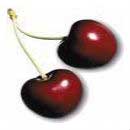 Blackberry

The blackberry is the most extensively available fruit.
The shrub produces a bramble fruit and it grows to an height of 3m which are used in desserts, wine and jams.
It is best for growing at fast rates in scrub, woods and hill sides. This fruit can spread widely.
It can tolerate poor soil conditions and it captivates places like wasteland and building sites easily.
The leaves are palmate with three to five leaflets with flowers of pink or while.
The flowers appear from May to August that ripens to dark purple or black fruit, forming the "blackberry".
It is actually not a berry, but it is an aggregate fruit of numerous drupelets.
Raspberry

The Raspberry is not a true berry, but it is a composite fruit. It has the capacity of widely spreading.
It is also known as Red Raspberry which is a tart and sweet fruit.
It is similar to blackberry but it is different in size and color. It plants in l ate summer or the early autumn.
Raspberry grows in a place like forests or fields especially where there is free space due to fire or wood-cutting processes that has occurred.
A golden Raspberry, which is in pale yellow, has been selected by horticulturalists.
Another raspberry called black raspberry which is known as blackcap, is a North American species. It is a cultivar of Rubus occidentals.
Cloudberry

Cloudberry is a pale red fruit that grows to a height of 25 cm, initially which turns into amber color in autumn.
When cloudberry ripes it acquires soft, juicy, golden-yellow and are rich in Vitamin C.
It is a good supplement to cure scurvy due to its rich Vitamin C content.
It acts as an inbuilt natural preservative due to a good content of benzoic acid.
The Cloudberry leaves can cure problems like urinary tract infections as used in the ancient Scandinavian herbal medicine.
In Sweden, they are also used as an ice cream topping. In Canada, cloudberries are used to flavor a special beer.
Wineberry
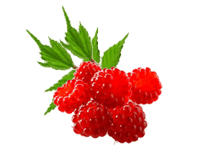
Wineberry(Rubus phoenicolasius), is also known as Japanese Wineberry, that are orange or red in color around 1cm in diameter.
This fruit is mainly used for making wine, despite the name, they are not fit for making wines (they taste tart).
These are found extensively in the eastern part of the United States and Europe and are prevalent in New Zealand.
The moist and loamy soil supports their growth widely, with protection from the wind.
This plant bears fruit in the summer or in the early autumn.
The fruit is orange or red in color with a diameter of around 1cm. The leaves are whitish underneath.
Bilberry or Whortleberry
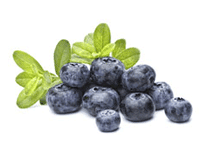
Bilberry is a name given to species of low-growing shrubs of the genus Vaccinium (family Ericaceae) that bear tasty fruits.
This species also known as blaeberry, whortleberry, whinberry, myrtle blueberry, and other names regionally.
Bilberries are rarely cultivated but fruits are sometimes collected from wild plants growing on public lands, especially in Scandinavia and Poland.
Vaccinium uliginosum fruit is odon in Swedish and juolukka in Finnish. The fruits are eaten fresh, or are usually made into jams, juices or pies.
Bilberry fruit contains high concentrations of tannins, that act as both an anti-inflammatory and an astringent.
Bilberry fruit offer relief for vascular disorders such as capillary weakness, venous insufficiency, and hemorrhoids.
Huckleberry

Huckleberry is a name used in North America for several plants in two closely related genera in the family Ericaceae, Gaylussacia and Vaccinium.
Fruits are edible, sweet, and grows to an height of 10 mm in diameter, that are mostly borne singly.
Leaves of this plant are used for tea during the winter.
Huckleberry is rich in antioxidants and is used as a culinary fruit in herbal medicinal preparations.
Huckleberry supplements may keep your heart healthy by improving blood flow to the heart.
This also helps to keep your blood vessels strong and may reduce your risk of developing atherosclerosis.
This beneficial activity of Huckleberry is mainly due to components called anthocyanins.
Blueberry

Blueberryrefers to the plants of genus Vaccinium, which also includes cranberries, bilberries, and many wild shrubs
This plant produces edible, round, blue berries (botanically false berries) with flared "crowns" at the end.
In North America, the most common cultivated species is V. corymbosum, the Northern Highbush Blueberry.
These plant can be both cultivated as well as picked wild. The fruit are first white, then reddish-purple, and turn blue on ripening.These are used in jellies, jams & pies.
Improves antioxidant in body systems and hence provides special protection from oxidative stress and helps in the protection of cardiovascular system.
Large number of phytonutrients are found in blueberries. This helps to resist the diseases towards the body.
barberry

Barberris belongs to the genus of about 450-500 species of deciduous and evergreen shrubs from 1-5 m tall with thorny shoots.
The native of this fruit is the temperate and subtropical regions of Europe, Asia, Africa, North America and South America.
The deciduous species are noted for good autumn color, the leaves turning pink or red before falling.
This fruit contain a chemical called berberine, is used to inhibit the growth of bacteria in test tubes, and hence helps to promotes the function of good immune system.
The barberry fruit extract appear to have natural antihistamine and anti-allergy potential.
It has been used in Indian folk medicine to treat diseases like diarrhea, fever and improves appetite, relieve upset stomach, etc.
Gooseberry
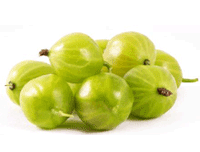
The gooseberry is a well-known fruit-bush that are found in northern and central Europe and in North America.
Gooseberries grow best in summer humid, cool regions with great winter chilling.
The fruit are borne singly or in pairs at the axils, is a berry with many minute seeds at the center.
Gooseberry is a bush, that grows upto a height of 1–3 m.
The branches are thick with sharp spines, standing out singly of two or three from the bases of the lateral leaf shoots.
A gooseberry may be green, white, yellow, or shades of red from pink to purple to almost black.
This fruit contains more than 80% of water. It also has protein, carbohydrate, fibre, minerals and vitamins. It also contains Gallic acid which is a potent polyphenol.
Nannyberry or sheepberry

Nannyberry is a large shrub or small tree native to the north-eastern United States and southern Canada.
The Nannyberry is also called as Sweet viburnum or Sheepberry.
Like all viburnums, the leaf of the Nannyberry is oppositely arranged on the twig.
The leaf of this fruit is oval in shape, with 3.5 inches long, finely serrate, with a winged petiole.
The flowers are small, whitish and arranged in large round clusters.
The fruit is a small round blue-black drupe, about 3/8 of an inch on a reddish stem.
The leaves of this fruit, as well as the concoctions made from the seeds, berries, and bark, are used to treat the problems such as respiratory, digestive and menstrual problems as well as relieve pain and relieve anxiety.

Mulberry

This used as both fruit and ornament the mulberry should be more generally planted.
Even if the fruit is not to the taste, the tree is naturally open-centered and round-headed, and is an interesting subject.
The fruits are in great demand by the birds, and after they begin to ripen the strawberry beds and cherry trees are freed from robins and other fruit-eating birds.
Mulberry refers both to the mulberry tree and to the fruit of that tree.
The mulberries are small to medium-sized trees native to warm temperate areas of Asia and North America.
They are fast-growing when young, but soon become slow-growing and rarely exceed 10-15 m tall.
The leaves are alternately arranged, simple, often lobed, more often lobed on juvenile shoots than on mature trees, and toothed on the margin.
The fruit is a multiple fruit, 2-3 cm long, red ripening dark purple.
The fruit is an edible fruit and is widely used in some places.