



All Fruits A-Z
all about fruits about fruitsinfo fruits facts Garderners Community contact fruitsinfo fruit kids

Pome Fruits

The pome fruits are the varieties that includes the following type of fruits:
Apple
  • Apples have been a very important food in all cooler climates, and are probably the earliest tree to be cultivated.
  • To a greater degree than other fruit tree, except possibly citrus, apples store for months while still retains much of their nutritive value.
  • Winter apples, picked in late autumn and stored just as above freezing, have been an important food in the Asia and Europe for millennia, and the United States since the arrival of Europeans.
Chokeberry or Cooking Apple
  • The Chokeberries (Aroma) are two species of deciduous shrubs in the family called Rosaceous, native to eastern North America.
  • The two species are readily distinguished by their fruit colour, from that the common names derive.
  • The leaves are alternate, very simple, and with crenate margins; in autumn the leaves turn a bold red colour.
  • The flowers are quite small, with 5 petals, and also produced in corymbs of 10-25 together.
  • The fruit is a small Pome, with a very astringent, bitter flavor; it is eaten by birds (birds do not taste astringency and feed on them readily), which then disperse the seeds in their droppings.
  • The name "chokeberry" comes from the astringency of the fruit, which are inedible raw.
  • Red Chokeberry are, Aronia arbutifolia, grows to 2-4 m tall, rarely up to 6 m, with leaves 5-8 cm long.
  • The flowers are white or also with pale pink, 1 cm diameter, and the fruit red, 4-7 mm diameter.
  • Black Chokeberry, Aronia melanocarpa, tends to be the smaller, rarely exceeding 1 m tall, rarely 3 m, and spreads readily by root sprouts.
  • The leaves are very smaller, not more than 6 cm long. The flowers are white, 1.5 cm diameter, and the fruit black, 6-9 mm diameter.
  • The two species can hybridize, giving the Purple Chokeberry, Aronia x prunifolia. It is intermediate between the parents, having purple berries.
Chokecherry
  • The Chokecherry (Prunus virginiana) is a species of bird cherry (Prunus subgenus Padus) native to North America, where it is fould almost throughout the continent except for the Deep South and the far north.
  • It is a suckering shrub or small tree growing to 5 m tall.
  • The leaves are oval, 3-10 cm long, with a coarsely serrated margin.
  • The flowers are produced in racemes of 15-30 in late spring (well after leaf emergence).
  • The fruit are about 1 cm diameter, bright red, with a very astringent and sour taste.
  • There are two varieties, Common Chokecherry Prunus virginiana var. virginiana. Eastern North America. Leaves are hairless, underneath or downy only in the vein axils.
  • Western Chokecherry Prunus virginiana var. demissa. Western North America.
  • Leaves are downy underneath.
Hawthorn
  • Hawthorn is the name of a large group of shrubs and very small trees in the genus Cartages, family Rosaceous, characterized by their small, apple-like fruits and thorny branches.
  • The fruits are sometimes known as 'haws', from which the name derived.
  • The original name was applied to the species native to northern Europe, especially the Common Hawthorn.
  • monogyny, but is now applied to the entire genus.
  • They are native to the temperate northern hemisphere.
  • The number of species in the group could extend to a thousand or more, though some botanists would reduce the number of species considerably.
Juneberry or Saskatoon
  • The June berry (Amelanchier Anatolia) is a serviceberry found in western North America.
  • Large numbers of small white flowers appear in spring.
  • The small purple berries, actually pomes, ripen in June and July.
  • This large perennial shrub may grow up to 5 meters in height; it is often found in clusters.
  • The June berry is also known as the Saskatoon berry, from the Cree word "misaskwatomin".
  • The city of Saskatoon, Saskatchewan is named after this plant.
  • The Native American food pemmican was flavored by Serviceberry fruits in combination with dried meats, and the stems were made into arrow shafts.
Pear, European and Asian species
  • Pears are trees of the genus Pyrus and the fruit of that tree, edible in some species.
  • Pears are native to temperate regiona of the Old World, from Western Europe and north Africa east right across Asia.
  • They are medium sized trees, reaching 10-17 m tall, often with a tall, narrow crown; a few species are shrubby.
  • The leaves are alternately arranged, simple, 2-12 cm long, glossy green on some species, densely silvery-hairy in some others; leaf shape varies from broad oval to narrow lanceolate.
  • Most pears are deciduous, but one or two species in Southeast Asia are evergreen.
  • There are about 30 species of pears.
  • Three are important for edible fruit production, the European Pear Pyrus communist cultivated mainly in Europe and North America, the Ya Pear Pyrus bretschneideri, and the Nashi Pear Pyrus pyrifolia (also known as Asian Pear or Apple Pear), both grown mainly in eastern Asia. There are thousands of cultivars of these three species.
Quince
  • The Quince Cydonia oblonga, the sole member of the genus Cydonia, is a small to medium size tree native to warm-temperate southwest Asia in the Caucasus region.
  • It is a fruittree related to apples and pears, and like them has a pome fruit, which is bright golden yellow when mature, pear-shaped, 7-12 cm long and 6-9 cm broad; the fruit flesh is hard, and strongly perfumed.
  • The immature fruit are green, with dense grey-white pubescence which mostly (but not all) rubs off before maturity.
  • The leaves are alternately arranged, simple, 6-11 cm long, with an entire margin and densely pubescent with fine white hairs.
  • The flowers, produced in spring after the leaves, are white or pink, 5 cm across, with five petals.
Service Tree
  • The genus Sorbus, or the Whitebeams, Rowans, and Service Trees, is a genus of about 100-200 species trees and shrubs in the subfamily Maloideae of the Rose family Rosaceae.
  • Service tree bears a fruit known as a sorb or sorb apple.
  • The exact number of species is disputed considerably between different authorities, due to the number of apomictic microspecies, treated by some as distinct species, by others grouped in a much smaller number of variable species.

The stone fruits
The berry fruits


Strawberry is not a berry
Orangutans love mangoes
Apples have 25% air
Tomato is a fruit!
Banana-a cure for heartburn
200 seeds
Pumpkins and avocados are fruits
Dark green vegetables are more Vitamin C rich
Banana is not a fruit in reality.
Bananas are easily digestible
Cockroach repellent fruit
An apple tree can produce 400 apples a year
Bilberries improve night vision
Cherry seeds believed to have satanic power
Watermelon used to carry water
Worlds favorite fruit
Strawberries and cashews have seeds outside them
Kiwi is rich in Vitamin C
Oranges help fight anti-aging
Eating fruits avoids miscarriage
Eating fruits reduce the risk of diseases
Lemon is a good source of Vitamin C-Prevents Scurvy
7000 apples
Grapes do not ripen once plucked
Banana slip accidents in Britain
Quick ripening
 Lemons kill bacteria
Pear-wood is hard
Banana-the 1st fruit on earth
Apple stuck in Adam's throat
Cabbage-a water vegetable
Banana ripens quickly in brown paper bag
Peanut is the main Main component of nitroglycerine
Leaves of raspberry help to regulate menstrual cycles
Lime oil is useful to cool fevers
Durian is one of the world's biggest fruit
Avocado leaves are harmful to animals
Dried fruits contain more calories than fresh fruits
An apple is a very refreshing tonic for oily skin
Eating fresh figs during pregnancy helps from prolonged labor
Gibbons prefer to eat fruits twice a day
avocados are the world’s most nutritious fruit
Eating grapefruit protect from diabetes
Babaco is gorgeous torpedo shaped fruit
Sapodilla is a uniquely tasted fruit
Bilimbi fruit is more effective for several human ailments
Chempedak fruit is really not too big
Damson fruit is more effective to create fruit paste or cheese
The name pine-apple was the original name for a pine cone
Pineapples used in blood tests
Kiwis were once known as Chinese gooseberries
Eating an apple is a more reliable method of staying awake
Pineapples are berries, just like strawberries and blueberries
A half-cup of figs has as much calcium as a half-cup of milk
There are over 200 different known species of raspberries
There are seven varieties of avocados grown commercially in Texas
Blackberry juice was used to dye cloth navy blue and indigo
Black currant juice can be used to soothe sore throats and colds
Delicious oranges in the world are grown in Florida
Eggplants are actually fruits
An avocado is a fruit and not a vegetable!
Avocado has more fat content than any other fruit.
A single fruit is about 125 grams on average;
Bananas are allergic for some people.
Bilberry contains nutrients that are good for eyes.
Cherimoya seeds are poisonous
Clementines are popular in the winter months.
A durian is a large fruit with a powerful smell.
Huckleberries are well liked by lots of mammals
The jambul fruit leaves and bark are used for controlling blood pressure and gingivitis.
Lime oils are often used in perfumes
Lychee seeds are poisonous
Purple Mangosteen has to be grown in temperatures of above 40 °F (4 °C).
Grapes are the fruit of a woody grape vine.
Dirty cantaloupes can spread bacteria.
A watermelon contains 92% water.
Raisins are dried grapes.
Cupuacu pulp is also used in cosmetics products
An orange’s vitamin C content helps fight back assaults
Strawberries are the only fruit
A cucumber is a fruit
Grapefruit can actually react negatively
Red fruits help keep your heart strong.
Orange fruits help keep your eyes healthy.
Yellow fruits help keep you from getting sick.
Green fruits help make your bones and teeth strong.
Blue and purple fruits help your memory.

Special fruits for this week

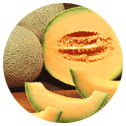
cantaloupe


Cantaloupe

Cantaloupe are served as fresh fruit or as salads or as a dessert with ice cream (Read more)

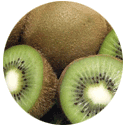
kiwis
Kiwis

kiwifruit will be fairly large and plump with thin "fuzzy" brown skin   (Read more)

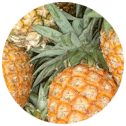
pineapple

Pineapple

Pineapple fruit is native to the Asian tropics, with a delicate and fresh fragrance   (Read more)


What season does a mango cultivate best in?

  Winter
  Summer
  Spring
  Autumn

 
About us | Contact us | Whole Fruits | Lists Of Fruits | Fruits Classification | Seasonal Fruits | Storage of Fruits | Fruits Nutrition | Fruit Recipes | Uses of fruits | Fruits Carving | Types of Fruits | Fresh Fruits Beauty Tips | Fruits Gallery | Fruits Glossary | Fruits Quiz | Processed Products Of Fruits | Links | Tell a Friend | Sitemap

Powered by Contempo technologies pvt ltd

Copyright © Fruitsinfo 2004-2013 - All rights reserved