






 Full List of Fruits Avocado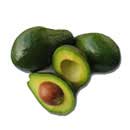
Avocado
Avocado is colloquially known as the Alligator Pear because it reflects its shape and the leather-like appearance of its skin. They are commercially priceless and are cultivated in tropical and Mediterranean climates throughout the world. With that said, it varies in weight, ranging from 8 ounces to 3 pounds depending upon the variety of avocado.
Origin - They are known to originate from Mexico.
Scientific name - Persea americana.

| Bacon | Description | Size | Appearance | Ripe Characteristics |
|---|---|---|---|---|
 |
1. Oval-shaped fruit 2. Medium to large seed 3. Easy peeling 4. Light taste |
Medium, ranging from 6 to 12 ounces | Smooth thin green skin with a yellowish green flesh. | Skin remains green, darkens slightly Fruit undergoes gentle pressure when ripe. |
| Hass | Description | Size | Appearance | Ripe Characteristics |
|---|---|---|---|---|

|
1. Oval-shaped fruit 2. Small to medium seed 3. Easy peeling 4. Great tast |
Full range from average to large, 4 to 13 ounces. | Stony, thick but malleable skin. Pale green flesh with creamy texture. |
Skin darkens as it ripens Fruit undergoes gentle pressure when ripe. |

| Lamb Hass | Description | Size | Appearance | Ripe Characteristics |
|---|---|---|---|---|
 |
1. Pebbly skin with pale green flesh 2. Smooth, creamy, nutty taste 3. Large in size 4. Symmetrical in shape |
Ranges in size from 11.75 oz to 18.75 oz. | Looks and ripens similar to a Hass avocado. Oval in shape with a medium-size seed. |
Skin darkens as it ripens. Undergoes gentle pressure when ripe. |
| Gwen | Description | Size | Appearance | Ripe Characteristics |
|---|---|---|---|---|
 |
1. Fleshy oval fruit 2. Small to medium seed 3. Easy to peel 4. Great taste |
Medium to large, ranging from 5 to 14 ounces | Stony, thick but malleable green skin. Creamy, gold-green flesh |
Green skin turns dull. Fruit undergoes gentle pressure when ripe. |
| Fuerte | Description | Size | Appearance | Ripe Characteristics |
|---|---|---|---|---|

|
1. Pear-shaped 2. Medium seed 3. Peels easily 4. Great taste |
Medium to large fruit, ranging from 5 to 13 ounces | Soft thin green skin. Creamy, pale green flesh. |
Skin remains green always. Fruit undergoes gentle pressure when ripe. |
| Pinkerton | Description | Size | Appearance | Ripe Characteristics |
|---|---|---|---|---|
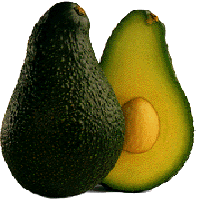 |
1. Long, pear-shaped fruit 2. Small seed 3. Easy peeling 4. Great taste |
Large fruit, ranging from 9 to 18 ounces | Medium thick green skin with slight pebbling Creamy, pale green flesh. |
Green skin deepens in color as it ripens Fruit undergoes gentle pressure when ripe. |
| Zutano | Description | Size | Appearance | Ripe Characteristics |
|---|---|---|---|---|

|
1. Pear-shaped fruit 2. Easy to peel 3. Light taste 4. Waxy bumps on the skin |
Average to large fruit, ranging from 7 to 14 ounces | Shiny, thin yellow-green skin. Pale green flesh with light texture |
Skin holds on to color when it is ripe. Fruit undergoes gentle pressure when ripe. |
| Reed | Description | Size | Appearance | Ripe Characteristics |
|---|---|---|---|---|

|
1. Round-shaped fruit 2. Easy to peel 3. Good taste 4. Medium Seed |
Average to large fruit, ranging from 7 to 18 ounces | Thick green skin. Pale green flesh with creamy texture |
Skin holds on to color when it is ripe. Fruit undergoes gentle pressure when ripe. |
West Indian type avocados yield enormous, soft round, glossy green fruits that are low in oil secretion and weighs up to 2 pounds. Guatemalan types produce medium ovoid or pear-shaped, pebbled green fruits that turn blackish-green when ripe.
Mexican variety of fruits are generally small with thin skin that turns glossy green or black when ripe. The flesh of avocados is deep green near the skin, becoming yellowish nearer the single huge, indigestible ovoid seed.
Seeds may germinate inside an avocado when it is over-matured, causing internal molds and breakdown. The oil content of avocados ranks second when compared to olives among fruits.
Avocados Avocados are good source of fiber that is great for maintaining a healthy appetite. To name a few nutrients, an avocado when cut into two pieces, a half cut avocado will contain the following nutrients:
- 5g of fiber (17% of adult fiber needs)
- 36% of the recommended dietary intake (RDI) for folate
- 31% of RDI for vitamin K
- 24% of RDI for vitamin E
- 15% of RDI for potassium
They are a rich source of vitamin C, which is an amazing antioxidant contributing to cell protection from free radical damage. Half an avocado contains 13mg of vitamin C which is 32% of an adult's RDI.
| Vitamins (one avocado medium) | |
| Vitamin A | 1230 I.U. |
| Vitamin B3 (Niacin) |
3.9 mg |
| Vitamin B1 (thiamin) |
0.2 mg |
| Folate | 124.6 mg |
| Vitamin B6 | 0.56 mg |
| Vitamin C | 15.9 mg |
| Minerals (one avocado medium) | |
| Phosphorus | 82.4 mg |
| Calcium | 22 mg |
| Potassium | 1204 mg |
| Iron | 2mg |
| Sodium | 20 mg |
- Avocadoes exist in more than 500 varieties.
- It is also called as Alligator pear because of its texture and shape.
- Babies usually need fats and proteins in their diet, which avocado provides in abundance.
- Besides US and Mexico, Brazil, Dominican Republic and Colombia are the world’s top most avocado producing countries.
- A single avocado tree bears nearly 200 to 500 fruits per year.
- Avocados have 60% more potassium when compared to that of bananas.
- Hass is the common avocado in Unites States.
- Avocados consist of mono and polyunsaturated fat which acts as a good substitute for food rich in saturated fats.
- It provides all 18 essential amino acids that is necessary for the body to form a complete protein. Unlike the protein in steak, which is not easy for most people to digest, avocado protein is readily engrossed by the body for the reason that they also contain fiber.
- They are rich in fat but they are monounsaturated fat that is effective for reducing fat naturally.
- Just like other fruits avocados are high in water approximately 75% but remain nutrient dense.
Avocado is considered as a cholesterol controller because it is a rich source of monounsaturated fat which lowers the LDL levels by raising the HDL levels.
The fat content in Avocado does not add in to your cholesterol level. Researchers say that mono/polyunsaturated fats are the opposite of saturated fats, because they facilitate lowering the cholesterol level.
Avocado is a fruit that is flexible and can be served in various ways. One can enjoy it as a salad, or processed into a variety of other foods. With that said, options to serve avocado is endless. Following are some of the recipes that will help you make avocado a delight!
Prawn & avocado lettuce cups:
- lime juice 1/4 cup
- fish sauce 1/4 cup
- Brown sugar
- avocados
- cooked prawns-peeled and chopped
- Cilantro leaves
- 6 butter lettuce leaves
- Light sour cream
- Tomato jam
- Lime wedges
To serve:
Preparation: take a large bowl, mix together the lime juice, fish sauce and sugar, stirring to liquefy the sugar. Add avocado cubes to the dressing with the prawns and coriander. Toss gently. Fill lettuce leaves with the mixture and top with sour cream and tomato jam. Serve with lime wedges.
Avocado, lime and coriander salsa:
Ingredients:
- 2 Avocados
- 1 lime, juiced
- 1 tablespoon extra-virgin olive oil
- Finely diced small red onion -1/2
- Chopped coriander leaves1/3 cup
- Tabasco sauce
Step 1- chop the avocado (making it into dices would be fine) Place avocado in a bowl. Add some lime juice and toss it gently.
Step 2- take another bowl, add oil, onion and roughly chopped coriander to avocado. Add 2 to 3 spoons of Tabasco sauce to taste. Toss it gently. Use salt and pepper for seasoning, serve after 5 minutes. For best taste, you can serve it with chicken or prawns.
Depending upon type and variety, avocados vary greatly in shape, size, and color. Most of them tend to be pear-shaped, but some are almost spherical. Some have rough or leathery textured skin, while others have smooth skin with a shade of green color.
The color ranges from green to maroon, brown or purplish-black as they ripen. Avocados become very soft when they are ripened properly. Ripening process normally takes 3 to 5 days at room temperature. Ripening can be slowed down by refrigeration.
Avoid : Avocados with dark sunken spots, irregular patches, cracked or broken surfaces which are the signs of decay.Look for : For immediate use, select slightly soft avocados which yield to gentle pressure on the skin.
For use in few days, buy firm fruits that do not yield to the squeeze test.An extra tip : To avoid the browning of avocado flesh when exposed to air, immediately place the peeled fruit in lemon juice until ready for use. Irregular light-brown markings are sometimes found on the outside skin. These markings generally have no effect on the flesh of the avocado.